Blog Tag: Brand

  • How Cancel Culture affects brands

    How Cancel Culture affects brands

    When you hear ‘Simon Go Back’, you remember there was a movement led by the Indians against the Englishmen. Or say till recently, ‘nepotism’ was the face of every topic, targeting different sections of the film industry. 

    Find anything common between the two very different events?

    Well, both are results of a movement trying to cancel or boycott a specific issue at hand. The effects these phrases created on people, work, and even the country as a whole may be massive. But the generality sums up to the rising crusade – Cancel Culture.

    How about we elaborate a bit? Put on those keen glasses and keep reading!

    What is Cancel Culture? 

    According to Wikipedia, Cancel Culture is a modernized form of ostracizing someone or something from an existent community or social circles. This could be a person of importance, a universally recognized movement, an ideology, or even a practice that is followed. In short, anything can be a victim of this cancelation. 

    So, what happens exactly? Well, it’s pretty simple. You witness something you don’t like or approve of or are publicly offensive, then you raise your voice to take action against it through a shared appeal of canceling or disregarding the subject.

    “It sounds great but why do they have negative connotations when addressed?”

    Exactly what I thought!

    This basically depends on the various perceptions linked to the subject. A personal motive cannot trigger a cancelation. There needs to be a set of claims that withstand your purpose for the movement. However, personal is political (more so in recent times), and that naturally motivates a debate. 

    Let’s make it a bit simple, shall we?

    The Black Lives Matter campaign inspired beauty brands to rethink their marketing strategies (and their very existence too). While popular brands renamed their products, Fair and Handsome is a product that still retains the old name. Social media erupted in unison to cancel the brand and the brand ambassador – Sharukh Khan at the time. By this, it meant canceling out his movies and other endorsements as well. 

    And that’s where the line of chaos begins.


    You see, the brands are targeted to take accountability for the issues at hand. Prioritizing the ambassador here can lead to the dissolution of the actual purpose of the campaign.

    As a quick summary, Cancel Culture sure rouses huge masses to rethink their opinion on matters. But that also tends to deviate into questioning different structures linked to the specific case, losing an authentic opportunity to focus on the protest.

    The brand attack – Cancel Culture reign

    A voice for the voiceless, following woke activism, exhibiting the need for a knowledgeable society – these are what the Cancel Culture supporters stand for. At least that’s how it was conceived. 

    But, is it really that progressive nowadays?

    The Cancel Culture benefits were short-lived in reason. Although the movement still exists, the intolerance and biased criticism among select groups have split up the netizens too. 

    The popular food delivery app – Zomato was under the lens as one of their customer executives disrespected a regional customer based on their language barriers. Several other similar experiences brought netizens together urging the brand to take responsibility. Zomato managed it pretty well by responding in solidarity while also making sure they had a solution coming up to cope with the language snag. This way, the ‘reject’ or ‘cancel’ Zomato tag did not take further momentum. 

    FabIndia faced backlash for its festive collection ‘Jashn-e-Rizwan’ at the time of Diwali. It was deemed offensive as the name sounded negating the Hindu influence of the festival. Although FabIndia removed it later due to the unintentional trigger, Brand gurus also pointed out that it was an unnecessary inclusion of secularism in their promotions. 

    In both the above cases, netizens and critics poked out the brands’ negligence and demanded accountability for their actions.

    But where do the creators draw the line?

    The Freudian controversy was about the ethnicity of his (Sigmund Freud’s) methods used. It went to the extent of provoking the thought “Are his works meaningless?” And that’s where the thin thread of accountability and freedom of a creator depletes as well. 

    Would the critics be able to distinguish the art and the artist? Is all art examined on the same level of perception?

    Hmm…maybe! But answers to these are prone to change now and then.


    Cancel Culture encourages such debates which put the marketing organizations in a soup. I mean, who wouldn’t be if this threatens your whole structure!

    Brand worthy or not? 

    Creativity is unlimited and so is the space for criticism. Apart from the legal advertising censorship, an additional screening of concepts for the social media generation is seen to grow rapidly. 

    Tanishq got it controversial by showing interfaith unison, Manyavar for its ‘Kanyadan’ negative connotations, Sabyasachi for disrespecting a holy tradition, and Surf Excel for hurting the ‘Holi’ sentiments. 

    The internet was divided into two extremes when these brands were held responsible for the alleged claims. At a time when creators are going out the way to bring a moral change in societal hiccups, they are also held answerable for the same reason. The ‘creative perception’ from the audience moves farther away as criticism seems to be unidirectional. Contesting repression still faces backlash in the country due to specific groups, within and external to the internet getting triggered for multiple (slight) discrepancies. This means coming up with innovative scripts just got more competitive. 

    Where does this place the creators?

    Do they have to be politically correct or creatively right?

    Honestly, it’s finding a balance between the two. If a brand wishes to stay their ground on the published opinions, they must have a backup for why they do so. All that ‘cancelers’ need is to know your take on the alleged criticism. But in some cases, staying silent may also work in your favor (depending on the effect of the crisis, of course). The cancel hype stays in trend until there is another subject to scrutinize. But yes, it is true that while the commotion lasts, impacts on the brand reputation are bound to happen. 

    So, an easy way (or just another possible way) out of the doubts in creative expression is not to cave in but to build within. Marketing and advertising fields are flexible with the vulnerability of chaos. That’s been pretty evident from ads being sexist to being inclusive over the years. Brands must ensure to keep delving into firm concepts and scale off relative trigger graphs whilst having robust crisis managing strategies. 

    Like how every time a Bhansali film is called to ‘cancel’ for its appropriations, and still move ahead with a bigger success – brands have to make sure the right motive excels greater than the criticism at hand. Make your brand worthy!

    The internet of dissents 

    No icing is needed to blurt out the facts of social media. It’s brutal, overwhelming but still extensively useful. 

    While the brands got a hang of this, the critics weren’t far enough either. In fact, everyone was(is) a critic on social media, reminding the marketers to tread carefully. At the time of controversies, polarized criticism plays in a loop from different segments of the audience. 

    Think about brand SRK, the popular (brand) ambassador across many organizations in India and worldwide. The internet went crazy when his son was put on a legal trial. Certain groups erupted to cancel his movies, production, endorsements, and whatnot. The legacy of his whole career was disbanded for something external to his professional domain.

    Told you, everything is political in today’s world!

    The terms anti-religion, anti-Indian, and intolerance are often brought up in creative contexts regardless of their relevance there. One of the many reasons is the misinterpretation of Cancel Culture. Somewhere along the route, this movement embodied all kinds of ‘offense’ under its umbrella, blowing the purpose out of proportion. The internet of things is now looked at as the internet of dissents. 

    Canceling the Culture? 

    The popular brand Cadbury Perk came up with a mind-blowing campaign a few days ago to put this discussion on the table. It used its brand message smartly by addressing the issues of growing uneasiness in the country.

    All arrows right on the target!

    The ad mocked how people have innately developed a desire to stress rather than chill for everything they see or hear. So, they present an AI-controlled ‘Perk Disclaimers’ across viral videos, adding to the craziness (smartly). The stance has been widely applauded in the marketing world for its subtle wit. 

    This could be the mindscape of the ad world moving forward. Seeking the right space to fit in and portraying extreme creative techniques – ensuring that your brand is still playing the right cards. 

    Socio-creative balance is the key! 
  • A page off the cook-book: The chef’s recipe to Personal Branding

    A page off the cook-book: The chef’s recipe to Personal Branding

    Personal branding is more than just being there for the event. It’s no secret that your brand mirrors your values, purpose and eventually brand identity. While your portfolio is a great glimpse into your services, branding elements like your logo design, business cards and website play just as important a role in defining your personal brand visually. 

    In simpler terms, you are a stewing pot of clear soup and the only things that can promote you to being the star of your menu is that sprinkle of spices and stardust. Which ones, you ask? Look within and allow your customers to do too! Perceptions create associations, much like your favourite aroma is to your comfort food. 

    Plate in your networking skills and you have impeccable branding to get your message across potential clients. If you are still wondering how to get there, here is the perfect cookbook to set your foundation! 

    Find your cuisine 

    A narrative helps you lead by example. Twirl that story around till it becomes the centre of attention. While this doesn’t promise overnight success, it sure does make your competition look dull in comparison. Creativity is always the easiest way to score brownie points. 

    If you waltz in with the right emotion clients want to hear, you sell a service that they will want to buy. Marketing isn’t the easiest thing to crack but is definitely a project that pays great, literally and figuratively once you figure how to personalise your brand. 

    Remember when Jony Ive redefined industrial design with a swish of his genius? The face behind Apple’s magnificence in design can be credited to the man who influenced an entire industry to believe that good design in tech breeds success. His impact is undeniable. Minimalist design, visual brilliance and utility that made the news? Jony Ive’s work is recognisable from miles away.

    If you have ever owned an iMac, iPod or the iPad, chances are that you have yourself a piece of revolutionary product in more ways than one. 

    Unbox the right flavours 

    What do you offer that none of your contemporaries can? This is the single logic to developing your unique selling proposition. With some experience, you’d know exactly what your strong points are. If you still don’t, a little hunting for herbs in the forest will do the trick! Find your personal style and strengthen that to the maximum. This could either be one single ability or a skill set; work towards making it your USP. 

    Don’t be afraid to name-drop this skill whenever you can, it sets you apart! 

    Extra salt, and a dash of spice

    The collective personality of your brand and you are an inseparable team, professionally. Create a fusion of your real life personality in your work-life too. Experimentation is fun, we concur.

    Are you a stickler for perfection? Do you love to go a little extra? Cohesiveness is the spice. Put on that hat and conduct yourself like the head chef that you are. 

    Observe the glory of Bill Nye and how he owned making Science in bowties uber cool. His appreciation for science, combined with his expertise as a mechanical engineer makes him just as fun as he is reliable. The magic (It’s not magic, it’s Science!) in his personal branding lies in his promise to make science accessible and super fun for everyone who visits his website. 

    By carefully and planning a personal brand, you get a step closer to creating an association that is easy to recollect. 

     Your brand personality and thus, your reputation is vital to planning your strategy. 

    Stir it up regularly and let it boil 


    The better you plate, the more they eat! Represent yourself on social platforms that make your work shine. Focus on where the potential customers are. Content creation, especially on sites like Instagram act as persuasive messaging for viewers to assess your offerings and how you might work for their business. 

    Plan your content in the form of a calendar, with a mixture of content that optimizes the features offered by the site/app. Ensure that your copy is distinct for each platform and well-suited to match your brand personality. 

    A king’s serving 


    Finally, always remember that consistency in your branding throughout will keep recognition fresh in the minds of the audience. Don’t hesitate to accompany colours and fonts that scream – you! for the portfolio that’s served to the clients.  

    In order to let consistency come naturally to you, start with awareness first. Mindset decorates the table, a king’s serving impresses the customer. 

    Here’s some advice: Step out of your comfort zone to know what works for you. There will be some hits and there will be missed, but each stepping stone gets you closer to achieving the impact you envisioned for your personal brand!


  • The dynamic role of WoM in Digital marketing

    The dynamic role of WoM in Digital marketing

    Think back to the last time you bought a product off the online shelves without having to sneak a quick look at the comments or reviews. We bet that you haven’t, and rightly so. There is nothing like that extra reliable voice whispering to assure you of an experience you expect. Lucky for you, this is what 61% of online Indian shoppers think too! 

    In the words of Misner (1999), word of mouth is “the world’s most effective, yet minimum comprehended promoting system. ” Break this quote down, and you realize that the use of WoM has played a vital role through the years, right into the information age.

    A lucrative choice

    What makes WoM such a lucrative choice among customers is that it has the power of persuasion by poking at a person’s most inherent attitude of seeking trustworthy recommendations. Content for WoM is primarily generated by regular consumers whose suggestions are most often based on their experiences. It is this factor of social behaviour that discounts it as a market strategy by a brand. Put simply, it is an action by one member of the society with the intention to recommend or warn for the welfare of another.

    In terms of digital marketing, WoM has a dynamic role in its handout to social media marketing and Buzz marketing. Electronic WoM (eWoM), as it is called, are available in the form of reviews, recommendations, fashion hauls, unboxing videos, ASMR food reviews and product demonstrations, depending on your preferred source of an online platform. There are two kinds: Giving detailed information about the concerned product service and those that include opinions and pros/cons.

    In the virtual community // Content through the community

    The latter is fascinating – both for marketers and consumers. Known as mixed neutral WoM (MNWoM), these kinds of reviews often provide a space, much like forums where online shoppers have the opportunity to compare products and services based on opinionated details.

    These, over time, have enhanced the credibility of online reviews and positively affected online sales.

    How, you ask? The internet space prides itself on having a larger ration of information giving than information looking. Thus, these channels check to approve market products that consumers want and increase their credibility and effectiveness of eWoM valence.

    The brands themselves don’t make these channels. This is what makes it more approachable. The third-party websites and courses have proved to be a sort of community by itself through the backing between people who have never met.

    Getting to the goal // Influencing consumer behaviour

    An intriguing factor of credibility has also been the presence of negative WoM alongside the good ones. Consumer perceptions of authentic WoM are more often than not decided by the negative to positive proportion, lest they be seen as planted opinions by the company (if too many positive) or their competitors (if too many negatives).

    However, it is essential to note that the point here is not to seek to drive sales but to enhance online purchase intention. The ‘intention’ here refers to consumer perception of the product that may eventually convert to a purchase.

    Take, for example, unboxing videos on Youtube. Over the years, these videos have turned into a great deal owing to their content. Essentially, it is still WoM but with the added glamour of multimedia effects, an influencer personality and probably an informality of information dissemination.

    It is easy, economical, and, most importantly, it isn’t fired down the consumer’s throat. 

    This means that there is good news and great news. If used smartly, the good news is that eWoM is a shimmering gold mine of content that can help build a strong brand. 

    The great news is that it is possible to incentivize content and analyze it to derive strategies and digital marketing campaigns that can enhance the purchase intention. An instance of this is the infamous KFC campaign that leveraged the hoard of negative sentiment and rage to deliver the FCK campaign by smearing page-long apology advertisements. Most recently, the company also took off its tagline ‘finger-lickin’ good’ following feedback from consumers, calling it irresponsible.

    Therefore, online marketing efforts play an essential role in amplifying the effect of eWOM on community members’ online behaviour. In conclusion, a suitable eWoM campaign can thus amplify the positive impact of eWoM valence and content on purchase intention. This is mainly an excellent strategy for online Indian shoppers that increasingly rely on MNWoM for high involvement purchases. 

  • Managing your brand through the crisis.

    Managing your brand through the crisis.

    When we look at the world today, it seems as if somebody has hit the reset button to renovate it. The Global Pandemic has burned a deep hole in the economies of many countries and brought businesses to a standstill. The Business sector is still struggling to bounce back to the new way of life and trying everything to get back in the market and revive the economy. While several countries locking borders and restricting movement have affected businesses,  it has also affected the behavior and the mindsets of the customers to switch from conventional shopping to online marketing.

    The broader underlying question however, remains unanswered. What should brands do at this time? How do they plan their marketing campaigns? Should we wait till normalcy returns? Or is there a normalcy at all? These are some questions that we need answers to. 

    Research shows that people in these unprecedented times are consuming more digital content and looking online to satisfy their needs. At times like these, brands and leaders in the industry must take the plunge to make an impact amongst the consumers to create lasting impressions.

    Prepare

    Understanding the needs of the customers by conducting online surveys and polls like the ‘voice of customer’ are some initiatives brands can take to meet the consumer at the point of their needs. It is going to take much more energy and strength to understand customers’ needs, as pulling old tricks and using strategies that worked in the past may not strike your audiences in the current scenario. Conducting thorough surveys to hear what your consumers think of you as a brand will help you prepare a strategic plan to overcome pitfalls and continue to be a stronger brand.

    Brand Positioning

    As consumer behaviors and attitudes evolve with the changing situation of the pandemic, It is important for brands to position themselves for a better visibility. Safety, comfort, security and health are things that attract the ears of consumers in the current situation. Shifting brand positioning to speak this language will help consumers hear you out. This change in the language will require expertise of creative content producers who can re-shape your branding and messaging styles. Collaborative partnerships between brands and branding agencies are sure to help as the demand for creative content is on the rise. With many reliant on online reviews and visual advertisements, it is crucial for industries to reshape their campaigns to reflect the current interest of their consumers.

    The Marketing Approach

    The right approach to tackle this economic uncertainty is not to decrease or sink your marketing teams and budgets but instead to increase and create fresh content. With a growing population of eyes on social media, reaching the audience with inspirational content is the need of the hour. Brands that make a strong online presence at these uncertain times are said to be the beneficiaries of tomorrow’s loyal customers.

    Reaching out to the audience by creating captivating content is a start if you aren’t doing that already. As many consumers are looking for solutions online and are using social media as a direct medium of communication, being available for them is key during these times of crisis.

    Be Active on Social Media

    With a majority of the customers consuming content online, the need for a strong online brand presence is essential. Using various channels and means to tap into the online customer base is primary at this juncture to widen your reach and enhance the customer experience. It is crucial for brands to build online communities that are active and up-to-date with the trends and conversations in the world. Many brands have already begun working alongside their agency partners to design creative engagement activities to keep the ball rolling. 

    Empathize

    Though being active on social media and communicating important updates is vital at this point. Consumers want more than just that. Providing educational information that adds values to their lives and solving queries at every step are sure to earn your brand some brownie points. 

    Being empathetic to the current situation should be the primary focus for all kinds of businesses during this crisis. Caring for the communities and aiding in the relief are some things that consumers want to see happening around them. Like the plants that grow to bear fruit, a seed of generosity sown today, is sure to reap a good harvest tomorrow. Brands that demonstrate care and concern for the people and communities are sure to be known for their ethical values and will possibly remain in the industry for the long haul.

    Administering a humanized perspective in the market is vital as consumers prefer brands that are ethical and purposeful in their approach. Ensuring a human touch to the brand’s solutions connects people to the brand and builds brand loyalty.

    Finally, we urge brands to offer fresh ideas and provide value adds in the interest of the customer. Keeping an eye out on the competition is also important to avoid getting left behind in the run. Invest the time and effort to understand your consumers’ needs through research to discover insights and optimize the solutions of tomorrow. The more you plan your strategy the more the chances of staying ahead in the league of a post-pandemic world. Happy Branding!

  • Five Lessons to learn from Successful Brands That Failed

    Five Lessons to learn from Successful Brands That Failed

    A simple answer to such a question is captured in Nelly’s song. ‘Why do all good things come to an end?’ There have been many brands and corporate giants that have made a huge presence in the marketing world. And disappeared like the dust in the wind. It’s crazy to think that a company that is doing so well could never go out of the league without a masterstroke. Here’s a list of a few brands that tasted failures and the reasons behind it. For most people these are lessons to pick up from and for others it’s an interesting read. Nevertheless, We are sure you would be surprised by how quickly you forget these brands that were so popular.

    Brands That Come And Go

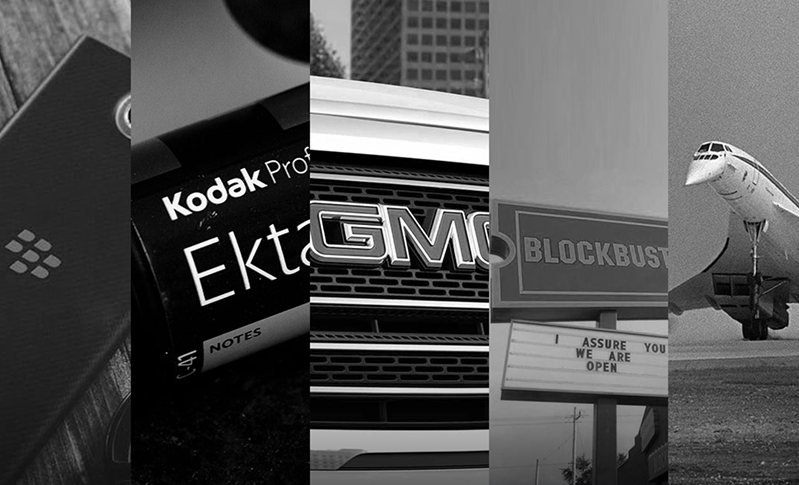
    You would probably remember some of the most popular phone brands of the 20th century. Blackberry was one such brand which was the go-to smart phone during its time. The brand faced severe failure once Apple and Google notched up the game higher by better phones. They explored better ways to make phones bigger, faster and smarter with larger phone screens and better user interfaces to attract the crowd.

    Blackberry, was a favorite amongst office goers, business men & women. It was the only smartphone during its time to be of its class. However it’s failure came because the brand spent too much time in advancing the security features of the phone. While the other tech giants banked on this opportunity to overtake the next generation of smartphones.

    Lesson #1 – Evolve With The Present Times

    Blackberry was the only phone of its kind that helped with consumer’s work on the go. Worried about a failure and playing defensive in the fast transforming world, Apple’s iPhone and other android phones invaded the market with new technologies.

    From Apple’s keynote event. Image credit: Ben Miller via Flickr

    While Blackberry was left in the shadows as Apple and other phone companies spent their time exploring next generation technologies. Companies like Nokia and Motorola went through a similar run of failure and lost the battle of the phone market. With the rise of digital technologies, and mobile software systems. The newer phones from Samsung and Apple took the market by surprise with it’s stunning software systems that catered to the present technologies and swept the market away from the Nokias, Blackberrys, and the Moto. Something to learn here is to think long term and not settle for what you already have made. Which is something that you’ll see common among most of the examples mentioned below.

    Lesson #2 – Be Bold And Take Risks

    Kodak, once the world’s biggest film companies that started in 1888, went through bankruptcy in 2012. You would wonder how could a company that stayed alive and kicking for over a century have such a disastrous end. Well, we will answer that question in just a bit. But, here are some interesting facts before that. Kodak was way ahead of its league when it introduced its first digital camera in 1975. However, the first digital camera that was made available to the public came about in the 1990s. You would be surprised to know that it wasn’t Kodak that introduced it though. Logitech and Apple came out with digital cameras that were available commercially for the public. 

    Another interesting fact is that a photo sharing site called Ofoto introduced in 1999 was acquired by the film giant Kodak in 2001. It is believed that Ofoto could’ve been the predecessor of apps like Google Photos or Instagram.


    However, the platform wasn’t used to its full potential and settled for its basic functions. Kodak had two huge opportunities to dominate the digital world. Yet it stayed under the wraps with a fear that the film business that had been running for nearly a century would come to an end. Sometimes it is better to take the risk and explore the next big thing than to be complacent and comfortable in whatever we do. If Kodak would’ve taken those big leaps, they would’ve probably been one of the biggest technological giants in today’s digital world. Sadly, today it is a company that is thriving to return to take its throne again and who knows? They might just come up on top with a bang. But then again, that’s possible only if they have an act up their sleeve for the current trends or a futuristic tech.

    Lesson #3 – Adapt To Customer’s Needs And Innovate Products

    General Motors popularly known as GM, was one of the biggest automobile parts manufacturers. Founded almost a century ago in 1908, it was the largest automobile manufacturer from 1932 through 2007. GM was very well known for manufacturing automobile parts and its network of suppliers & distributors. With a network of producing automobiles in more than 37 countries, they sold financial services as well. Known as a company of many firsts, it invented the ABS system that is a must in every car today. It was also brand/company the first to introduce hybrid cars. First Car manufacturer to include turn signals inside their cars.

    From being a giant in the automobile industry, General Motors filed bankruptcy in 2009. The move came to reality because of the failure to innovate the products and explore technologies. Some say that the leadership played a major role in its failure as they were more concerned in making profits than to improve the products or envision newer technologies. GM’s assets and the famous branding  was later purchased by General Motors Company. From GM’s lesson we learn that leadership plays a key role in the functioning and envisioning of the brand. If a brand is not led to listen and innovate to meet the needs of the world, failure is just a step away.

    Meanwhile, Tesla demonstrated an early innovation in electric cars segment.

    Lesson #4 – Never Underestimate The Competition

    Remember the times when TV, VCRs and DVD players were a major source of entertainment? Just before the turn of the digital storage system and cloud storage became a reality. CDs, DVD and VCRs were the hallmark of home cinemas. You could just walk into a video rental store and watch the latest movies at the comfort of your home. Blockbuster was one such video and games rental service which was popular in the US. Founded in the year 1985, it was one of the iconic brands in the space of video rental services with almost 85000 employees worldwide and 9094 stores. In 2000, a well known live streaming brand wanted to sell its firm for 50m USD and approached Blockbuster. The Blockbuster CEO turned down the offer calling it a small niche business. However, in a decade’s time, Blockbuster filed for bankruptcy due to its inability to adapt to the digital world. Later Netflix, the company that made an offer to Blockbuster stood the test of time and pride itself of an evaluation of 8.8bn USD today.


    Perhaps things would’ve been different for Blockbuster if they adapted to the digital world or saw a potential in Netflix’s products. Understanding the competitors, their products and advancing with the world is key to any successful business. Such has been the story of Blockbuster video rental services.

    Lesson #5 – Leave A Story


    We are sure you’ll remember Concorde. The supersonic plane that was during its time, the only commercially flying plane that covered long distances by half the time of a normal plane. This brand was a luxury in some sense and was set as a class apart. With enormous amounts of jet fuel it required to fly at great speeds, the aircraft was known to attract expats, businessmen and women. The British-French supersonic aircraft had to bid farewell to the aerospace for several reasons.

    One of major setbacks was the crash in Paris in July 2000 which killed all 109 onboard, due to a runway accident. This incident thoroughly shook fear in people. The fear of flying increased and the number of passengers decreased. In addition, the 9/11 incident played a huge role in striking fear again. And as the number of passengers choosing to fly kept decreasing. The maintenance costs were at the same time increasing due to the ageing factor of the aircraft. The British-French aircrafts were pulled out of service in 2003. For Concorde, that one fatal accident gripped the hearts of many with fear. And adding to that the maintenance costs became a major impediment in its operation. Though there are talks to revive the supersonic aircraft, we are not sure if we’ll ever fly in the Concorde again. Yet, we know that it will always be known of the King of the Air.

    Brands come and go, legacies remain!


    There will always be instances of brands that will fail miserably and come back with a bang. And there will also be brands that will just shut shop in a flick even though they’ve been there for decades. However, as a wise saying goes – Nothing is permanent and not everything is temporary. Brands will come and go, the more important bit is to leave a legacy and serve diligently while you are in the league. Because at the end of the day, consumers remember brands that served them well instead of those that didn’t.

  • Rebranding from a brand’s values and qualities

    Rebranding from a brand’s values and qualities

    A company that specializes in planning and designing interiors, should have a well-planned and designed logo which appeal to their Target audience. Orient Arts Interiors, or OA Interiors as they are known in Dubai, UAE, realized this gap in their visual identity. When they began growing and bagging bigger clients, they felt their existing brand identity wasn’t matching up to the image they wanted to give out.

    What were the brand values, and the qualities that OA stood for? Dedication, agility, passion, precision and teamwork. And what is that one thing in nature, known for all these qualities? A bee. What’s more, is that bees are also classic designers and architects. They make simple yet meticulous structures in nature.

    Aligning with this brand inspiration, we did their logo design. The letters O and A in the typography form the shape of a Honey Bee. A gradual & charming evolutionary transition from the bee to the logo is factored in, along with the usage of the colors black and yellow.

    The concept of the brand’s new brochure was planned and designed as an extension of the brand identity. We know bees for their many admirable qualities. And the honeycombs they make for their meticulous planning and detail. So, four hexagons – honeycomb cells – were placed on the cover.

    The patterned design on the stationery and other elements of the brand, was also inspired by a honeycomb. With many hexagonal cells stacked together, to form a design depicting stairs that lead upwards.

    The whole rebranding process gave the brand a rejuvenated and contemporary look. This makes one realize that to find solutions to something, it is important to look into the branding strategy. In this case, it was the nature of the brand’s offerings and its values, which we utilized fruitfully.

  • How the lack of a brand-strategy can result in the deceleration of business growth

    How the lack of a brand-strategy can result in the deceleration of business growth

    Building a brand is no easy endeavor. Creating a remarkable brand that’s trusted by its customers requires a clear vision, relevant skills, and an undying commitment to following a brand strategy. Young entrepreneurs and marketers looking to get their startups off the ground often find themselves working in the dark without a plan to keep them from veering away.

    In a highly competitive business landscape such as it exists now, these decision-makers cannot afford to overlook drafting a branding strategy.

    Detailed below are all the reasons why the lack of a brand strategy can hurt a startup and stifle its growth.

    The Lack Of Consistency

    Following a branding strategy involves following a set of guidelines that will represent the brand exactly in line with its intended vision, goals, and set of values. Startups that do not have a well-defined branding strategy in place lack consistency in their marketing.

    The lack of consistency in a startup’s marketing endeavors, in turn, can impact the results of these efforts tremendously. Without a documented branding plan, marketing campaigns will likely take place in an irregular manner. This inconsistency will hurt the business in more ways than one. It will not only confuse potential customers but also make the brand forgettable. Inconsistent messaging and communication throws mixed signals at existing and potential customers, making the brand a nuisance rather than an influence. Startups that are consistent in their branding witness revenue growths of 33% more than those that aren’t. Consistency in everything from logos, websites and social media profiles to beliefs, content and other ad hoc branding mediums ensures that the startup’s goal takes center stage, connecting with the right customer.

    The Lack Of Brand Loyalty & Pricing Convenience

    It is well known that confidence in a brand is an invaluable asset. From employees and partners to affiliates and customers, the more trust a brand can accumulate in itself, the better. From a branding perspective, if what a brand’s customers see, read, or hear about it in ads doesn’t match their experience when dealing with them, they could be in big trouble. Building such a reputation requires delivering on promises right from the get-go. Startups that don’t begin with a great branding strategy that’s aimed at offering their customers superlative customer experiences risk getting off on the wrong foot. Loyal customers go a long way in accelerating business growth. Additionally, those startups that have a strong branding strategy and follow their plans to the tee enjoy the freedom of being able to pricing their products & services as they please. Such brands eventually surge ahead of their competition, propelling revenue growth exponentially. 

    Shooting In The Dark

    Part of defining a brand strategy involves getting to know the target audience. Every startup’s branding strategy should be built around this target demographic. Those businesses that find that they’re not attracting the right customers more often than not suffer from the lack of having such a strategy to follow. This results in their target audience (that’s composed of people most likely to purchase their products and services) not paying any attention to them at all. Young entrepreneurs need to keep in mind that they’re not going to please everyone no matter how hard they try, which is why they have to determine who their target audience is and only then start targeting them. Doing so makes it simpler to ensure that every one of their marketing channels, social media profiles, and ad campaigns, all share a unified brand image aimed at pleasing this target audience.

    Acquisitions

    Acquisitions represent the long-term business value of branding, positioning a startup to eventually sell at a higher price. Startups with weak brands are destined to be bought at lower prices. But those that succeed can drive up their selling prices following a takeover offer. The bidder will pay primarily for the brand, not just the startup’s intellectual property or its diverse range of products and services.

    Branding isn’t just about improving the perception of a business, but also about making the business itself more valuable. Pursuing a branding strategy that focuses on assessing the customer journey and touchpoints while improving all facets of operations and sales helps immensely in this regard.

    Is your startup in desperate need of a branding strategy? Reach out to AdamsCreation!

    Having been in the business of helping startups from all across the country, establish their brand identities and establish themselves as market leaders in their respective niches for over two decades, we at Adams can help devise a branding plan specially tailor-made to suit your strategic vision.

    Comprehensive strategies and innovative ideas require great execution, which is why our team takes an integrated approach to ensuring your business is portrayed in the right light and is in an optimal position to overtake its competition. Get in touch with us right away, to avail a growth-centric branding strategy completely customized for your startup!